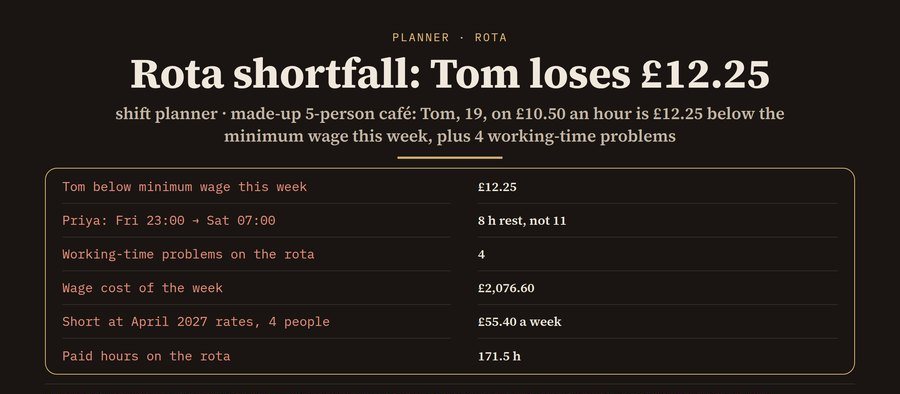
Pro: save your team and every week, copy a week forward with the Sunday → Monday rest check, track the 17-week 48-hour average, print the rota and export the hours for payroll.
Your rota: change any shift and the checks rerun
Shifts: 9-17 · 09:00-17:30 · 9am-5pm · split 10-14/18-22 · night 22-6 · day off off (also hol, sick). Add b30 for an unpaid 30-minute break; paid hours are the shift minus the break. Columns split by tab (copy from a spreadsheet), comma, semicolon or |.
Pro: the same rota every week, saved and ready for payroll
The check above is free and complete for one week, for as many people as you type. Pro is for doing it every week without starting again:
- Save teams and weeks in your browser, several sites or teams, and copy a week to the next in one click.
- Chained weeks: checks the 11-hour rest from Sunday night into Monday morning, which one week alone cannot see.
- 48-hour average per person over the saved weeks (up to 17), so you know who is over before it becomes a claim.
- Print or PDF of the rota for the staff-room wall, with hours.
- Payroll CSV: name, date, start, end, unpaid break, paid hours, £ per hour and pay for each shift, plus a weekly total per person.
- Calendar file (.ics) per person so each person gets their shifts in their phone calendar, and a JSON backup.
Pro: $9 a month or $75.46 a year, any number of staff and teams.
Pro monthly · $9 / month Pro yearly · $75.46 / year
What it checks, and the rule behind each check
- Minimum wage by age: from 1 April 2026, £12.71 an hour for 21 and over, £10.85 for 18 to 20, £8.00 for under 18 and for the apprentice rate. From 1 April 2027: £13.21, £11.27, £8.31 and £8.31. The week's date picks the rate. Arrears = (minimum − pay rate) × paid hours. If you underpay, the arrears must be paid back at once, and HMRC can send a notice for the arrears plus a fine.
- Daily rest: 11 hours between working days, 12 for under 18s. If someone finishes at 20:00 they should not start before 07:00 the next day.
- Rest break: one uninterrupted 20-minute break when the working day is over 6 hours. Under 18s get 30 minutes when it is over 4.5 hours. A 20-minute gap in a split shift counts.
- Weekly rest: 24 hours off each week, or 48 hours each fortnight. Under 18s get 48 hours a week.
- Weekly hours: 48 hours a week on average, normally over 17 weeks, unless the worker opted out in writing. Under 18s: at most 8 hours a day and 40 hours a week, with no averaging.
- Wage cost: paid hours × £ per hour. You can add holiday pay as a percentage, and employer National Insurance at 15% over £96 a week. Under 21s pay 0% up to £967 a week. Many small employers' Employment Allowance (£10,500 a year) covers their employer NI bill, so the NI box is off by default.
Sources read on 20 Nov 2026 on GOV.UK: National Minimum Wage and National Living Wage rates; Rest breaks at work; Maximum weekly working hours; The National Minimum Wage and Living Wage; Rates and thresholds for employers 2026 to 2027. Shift patterns, compensatory rest and some jobs have exceptions. This is a calculation tool, not legal or payroll advice.

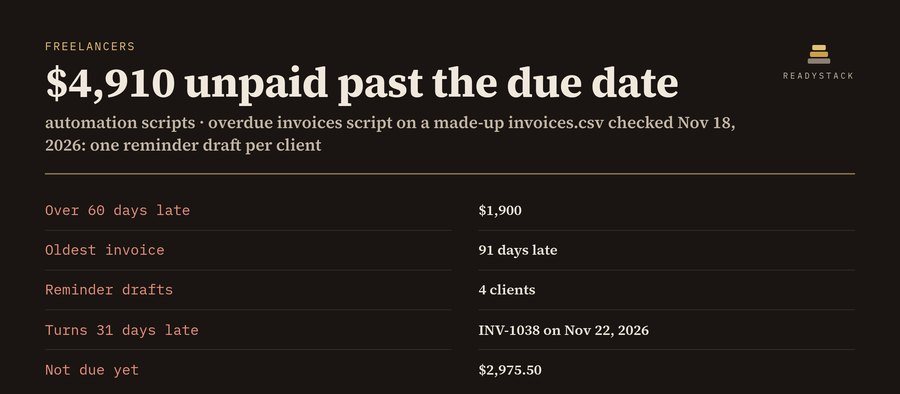 automation scripts — Python: invoices, contacts, bank and files
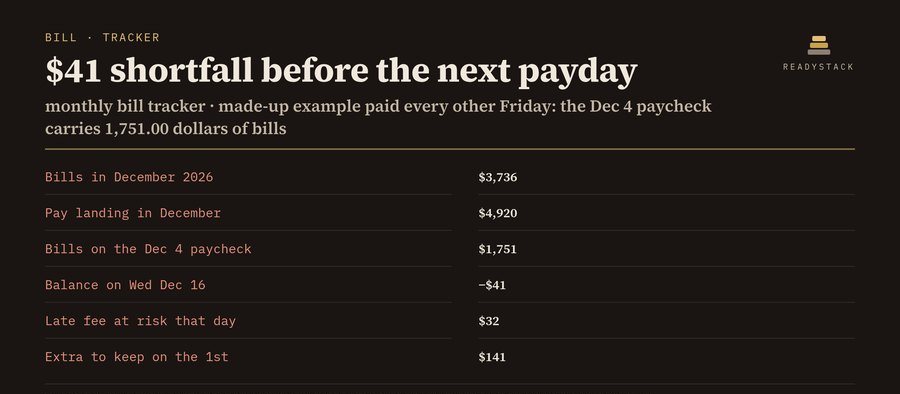 monthly bill tracker: pay-by date, which paycheck and late fee
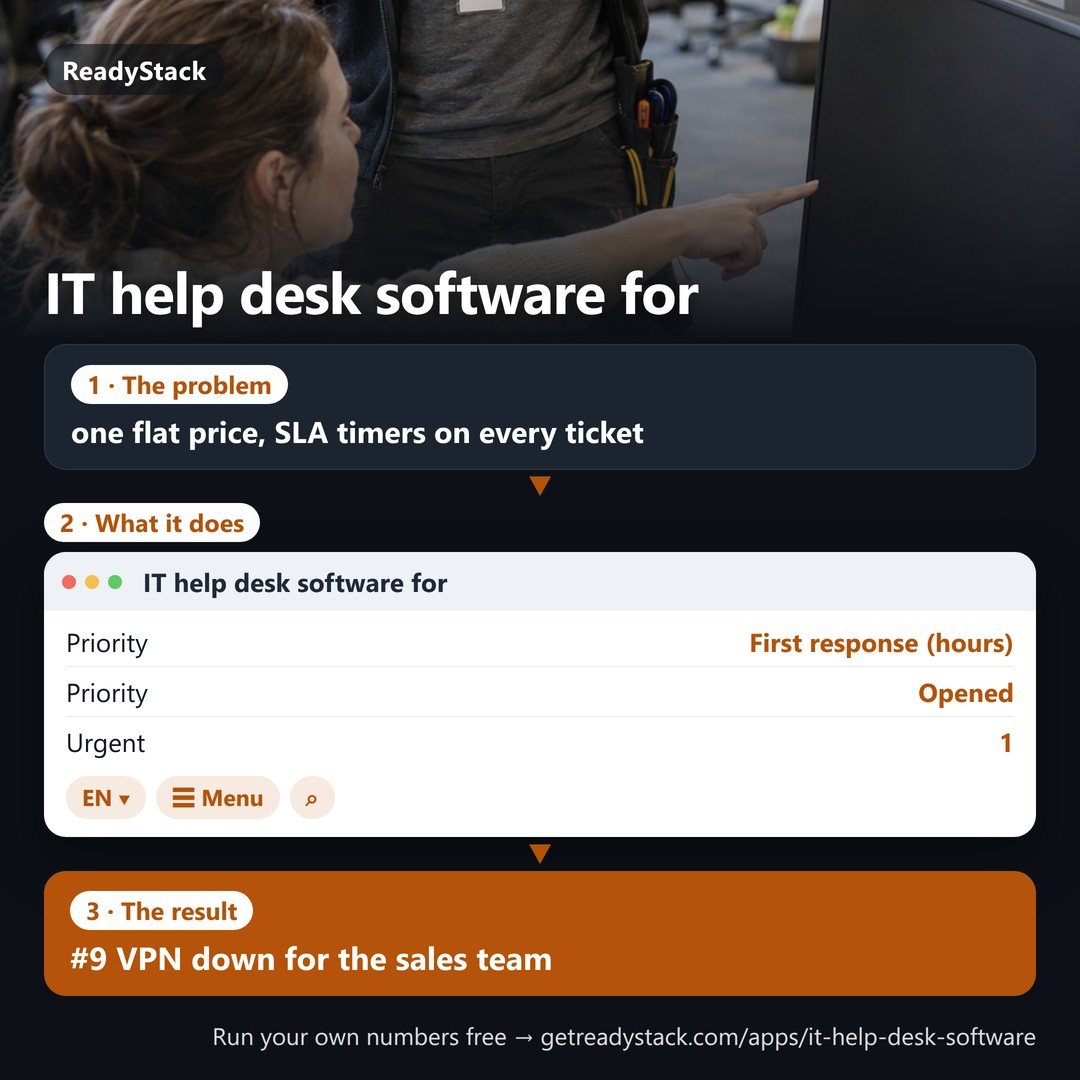 IT help desk software for small IT teams: one flat price, SLA timers on every ticket, an employee request portal
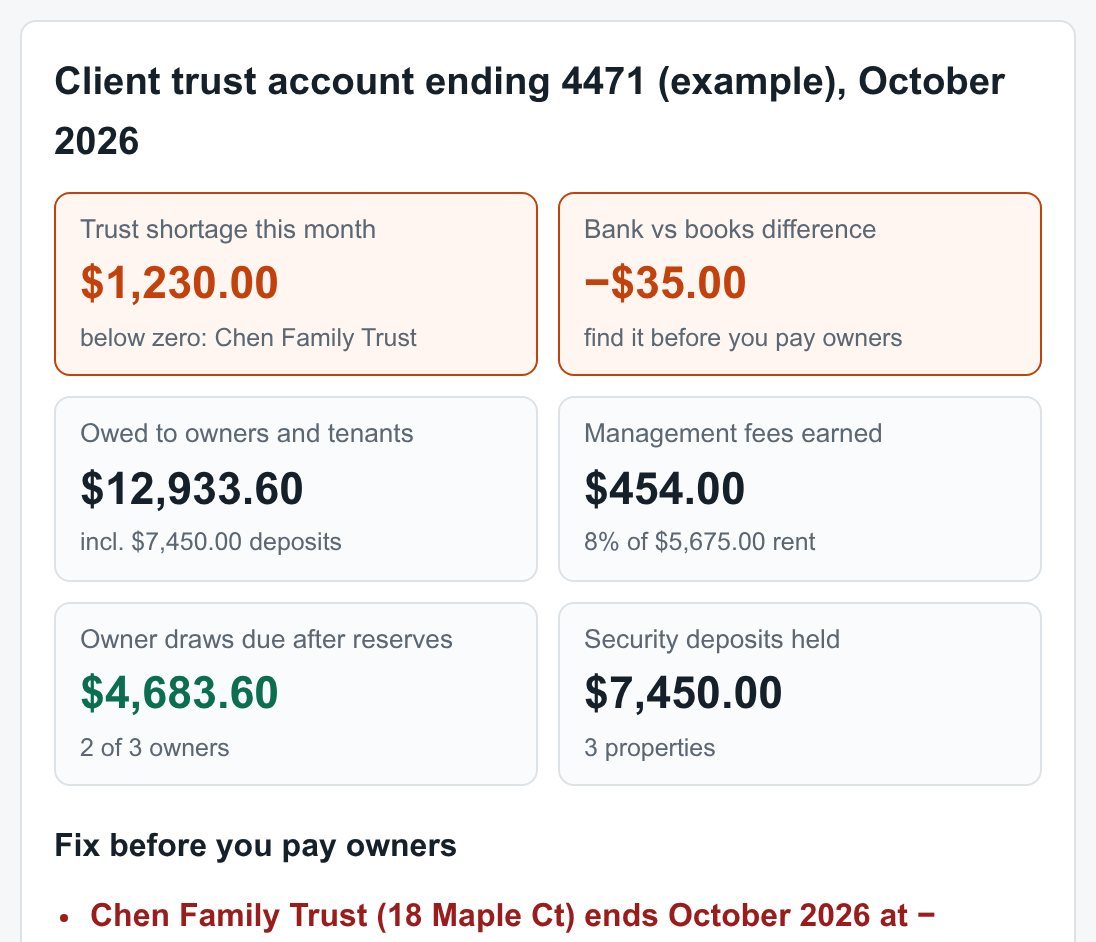 rental property bookkeeping: owner statements and trust recon