lead enrichment tools cost calculator: data credits, top-ups at a 30% premium, bounced emails and your real cost per usable email.
What you get: a 12-month sheet where unused data credits roll over up to 2x your monthly amount and top-ups start only when the bank is empty; a waterfall sheet that prices each extra provider step per extra email… Full version · $39 →
Updated 2026-11-09 · ReadyStack
Made-up example, filled in the file: 3,000 rows a month on Clay Launch find 1,800 emails; $20.52 is wasted on 144 emails that bounce, and $71.50 goes on top-up credits bought at a 30% premium.
Pricing pages tell you what a credit costs; this tells you what a usable email costs you: $15.49 per 100 in the example, 1.81 times the per-row price. It counts what other cost calculators skip: no-result rows are free, bounced emails are not, and credits above your plan carry a premium.
| Emails found | 1,800 |
| Data credits this month needs | 3,600 |
| Credits you must top up | 1,100 |
| Top-up cost | $71.50 |
| Of that, the top-up premium | $16.50 |
| Total spend this month | $256.50 |
| Emails that bounce | 144 |
| Usable emails | 1,656 |
| Spend that bought bounced emails | $20.52 |
| Cost per 100 rows enriched | $8.55 |
| Cost per 100 usable emails | $15.49 |
| Usable email costs this many times a row | 1.81 |
Full version — $39 once · The .xlsx you keep: 12 months with the 2x credit rollover cap, a waterfall sheet that prices each provider step per extra usable email, your month on Clay Launch and Growth (monthly and annual, actions included), and a blank copy
Everything updates as you type. Nothing is uploaded. This runs in your browser.
What you lose: Clay charges no data credits or actions when an enrichment returns nothing, but an email it finds is paid for even if it bounces later. In the example, 8% of 1,800 found emails bounce: $256.50 × 144 / 1,800 = $20.52 of the month bought addresses you cannot send to.
When: the moment your credits needed pass the credits in your plan. On Clay Launch and Growth every credit above that is a top-up at a 30% premium: 1,100 × $0.05 × 1.30 = $71.50, of which $16.50 is the premium. Unused credits roll over, but the bank never holds more than 2x your monthly credits; actions reset every billing cycle.
The rule, with the date: read on clay.com/pricing on 9 November 2026: Launch $185 a month on monthly billing ($167 on annual), 2,500 data credits and 15,000 actions a month; Growth $495 ($446 annual), 6,000 data credits and 40,000 actions; data credits start at $0.05; top-ups at a 30% premium. Clay repriced on 11 March 2026 (the old Starter plan was $149 a month). Prices change: type your own plan into the fields.
Why not a free calculator or the n8n template: free calculators multiply rows by a credit price. The n8n lead enrichment templates we read on 9 November 2026 ($39 on n8n.io, $499 on Gumroad, one-time) run the enrichment and spend your credits; neither tells you the cost per usable email before the run.
No risk: the result above is free and complete for your numbers, no sign-up and no limit on runs. The full version is your own file, one payment, no subscription.
Match rate = rows that came back with an email ÷ rows you ran. Bounce rate = hard bounces ÷ emails sent from those rows (take it from your sending tool). Credits per email = what your email column charges per hit; for a waterfall, use the average. Nothing you type leaves your browser.
The .xlsx you keep and reuse every month: a 12-month sheet where unused data credits roll over up to 2x your monthly amount and top-ups start only when the bank is empty; a waterfall sheet that prices each extra provider step per extra email found; a plan sheet that runs your volume through Clay Lau
One payment, one licence key for this tool. The key is shown right after payment.
Clay Launch costs $185 a month on monthly billing ($167 on annual) with 2,500 data credits and 15,000 actions; Growth $495 ($446 annual) with 6,000 credits; top-ups cost a 30% premium and data credits start at $0.05 (clay.com/pric
Buy the full version — $39I have a keyThis tool is 1 of 269 paid tools in English. All 269 with one key: Freelancer & Small Business Pass — $9.99/month · $79/year · Deadline reminders by email (free)
Need more than this one? ReadyStack Pass opens all 679 files and 559 full versions — $29/month or $199/year. See the Pass →
Paste this code into your page. It runs in your visitor’s browser and stays up to date. Nothing your visitors type is stored.
For businesses: your name and logo instead of ours, and each visitor’s result + e-mail in your inbox (only when they tick consent) — Pro from $19/month. See Pro →
· ReadyStack
Real numbers from this tool, line by line.
In a made-up example a solo founder on Clay Launch pays for 144 emails that bounce: $20.52 of a $256.50 month, plus $71.50 of top-up credits bought at a 30% premium.
The month, line by line: 3,000 rows enriched, 60% come back with an email, so 1,800 emails found. At 2 data credits per email found that needs 3,600 credits; the plan includes 2,500, so 1,100 credits are topped up. 1,100 × $0.05 × 1.30 = $71.50, and $16.50 of that is the premium alone. $185 + $71.50 = $256.50. With an 8% bounce rate, 144 emails bounce and 1,656 are usable. 100 rows cost $8.55; 100 usable emails cost $15.49, 1.81 times as much.
Clay's pricing page (read on 9 November 2026) is honest about the unit: data credits start at $0.05, Launch is $185 a month on monthly billing ($167 on annual) with 2,500 data credits and 15,000 actions, Growth is $495 ($446 on annual) with 6,000 credits and 40,000 actions, and top-ups cost a 30% premium. It also says a row that returns nothing costs no credits and no actions.
What it cannot know is your match rate and your bounce rate. A found email is charged when it is found, not when it is delivered. So the number that decides whether a client pays you more than you spend is the cost per usable email, and that number only exists once your rates are in.
You type 8 numbers: rows per month, plan price, included data credits, credits per email found, match rate, bounce rate, credit price and top-up premium. You get 12 lines back in your browser, from emails found to cost per 100 usable emails. Nothing is uploaded and there is no limit on runs.
The .xlsx is for the month after this one. A 12-month sheet applies the 2x rollover cap, so you see which months would have been covered by the bank. A waterfall sheet prices each provider step per extra usable email and marks the steps that cost more than you charge the client. A plan sheet runs your month through Launch and Growth on both billing periods; in the example annual Launch brings the month to $238.50 and 100 usable emails to $14.40. A blank copy sits next to the filled example.
It does not enrich anything and it does not touch your Clay account. The n8n lead enrichment templates we looked at ($39 and $499, one-time) run the enrichment; this tells you what that run will cost per usable email before you start it.
You type 8 numbers: rows per month, plan price, included data credits, credits per email found, match rate, bounce rate, credit price and top-up premium. It returns the top-up credits, the top-up cost, the spend that bought bounced emails and the cost per 100 usable emails. In the made-up example that is $256.50 for 1,656 usable emails.
Solo founders, SDRs and GTM freelancers who pay for a credit-based lead enrichment tool such as Clay out of their own budget and enrich a few thousand rows a month. If you bill clients per lead, it shows your real cost per usable email before you quote, not after the invoice arrives.
A pricing page tells you the price of a credit. It does not tell you what a usable email costs you, because that depends on your match rate, your bounce rate and when you cross the included credits. Clay charges no credits when an enrichment returns nothing, but a found email that later bounces was still paid for.
Free: the full month on screen for your numbers, 12 result lines, no sign-up and no limit on runs. Full version: the .xlsx with a 12-month sheet that applies the 2x rollover cap, a waterfall sheet that prices each extra provider step, a Clay Launch and Growth plan sheet, and a blank copy.
On 9 November 2026 the n8n lead enrichment templates we read sold for $39 (n8n.io, Hunter.io and Perplexity workflow) and $499 (n8n Lead Enrichment Workflow Engine on Gumroad), one-time. They spend your credits; neither shows the cost per usable email first. Clay Launch is $185 a month on monthly billing.
Made-up example: 3,000 rows x 60% match = 1,800 emails found. 1,800 x 2 credits = 3,600 credits, 1,100 above the 2,500 included. 1,100 x $0.05 x 1.30 = $71.50 top-up, of which $16.50 is the 30% premium. $185 + $71.50 = $256.50. 144 emails bounce, so $20.52 bought bounced emails and 100 usable emails cost $15.49.
One question, answered by the person who built it. Your email only if you want the answer sent.
For a team or company: for an invoice with your company details, a quote or several licences, write to [email protected].
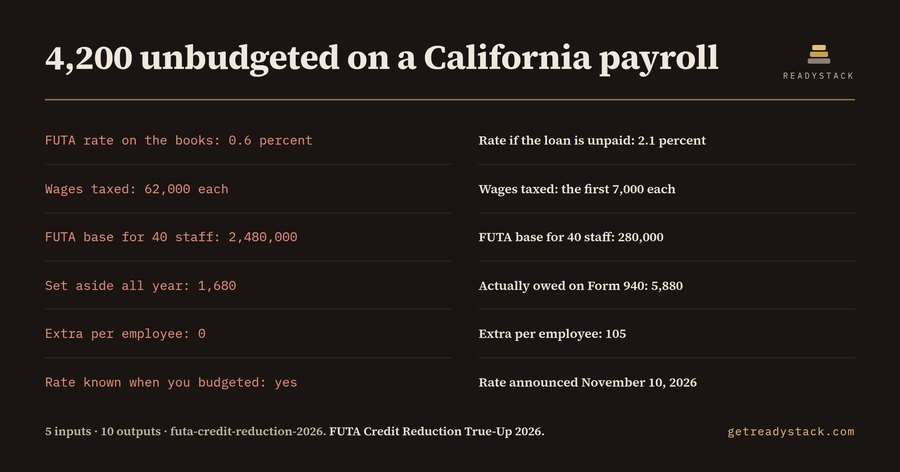
FUTA credit reduction true-upYour payroll system accrues FUTA at 0.6%. The Department of Labor announces the credit reduction on November 10, 2026 - and it applies…FreeFull version $60
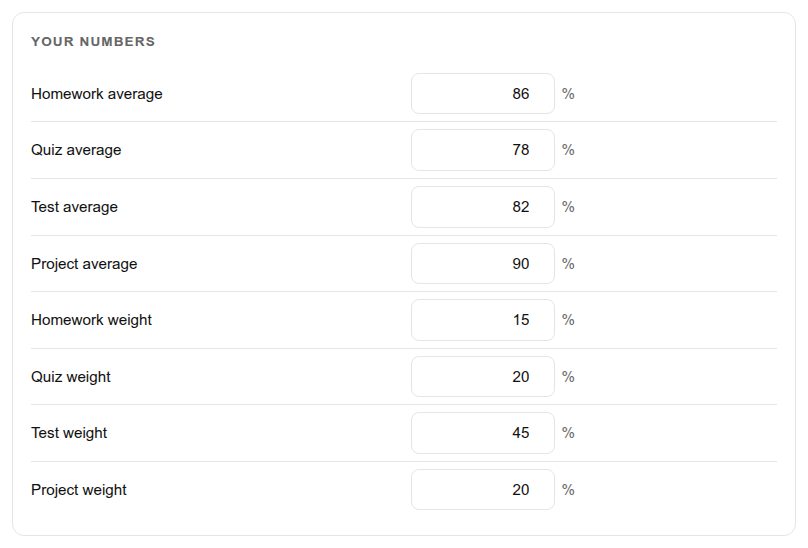
High School Teacher Weighted Gradebook CalculatorComputes final_grade_percent, gradebook_error_gap, and points_needed_for_90 so weighting mistakes are visible before report-card grades are…Free
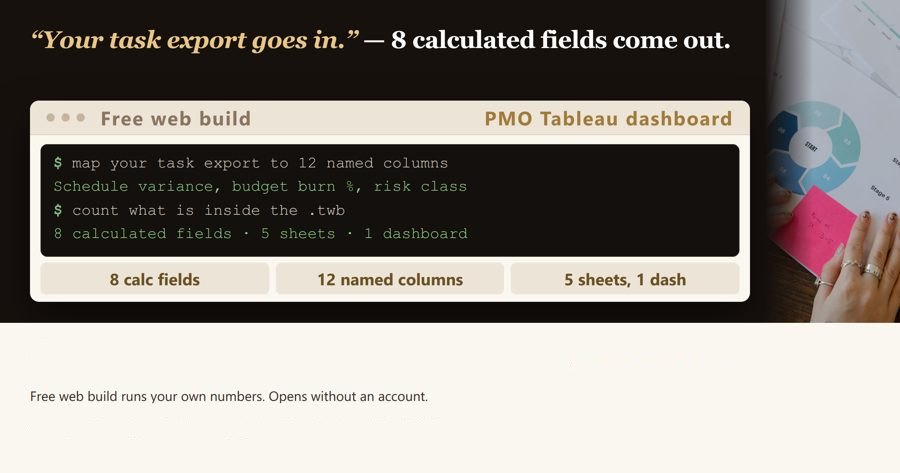
Project Dashboard Template for Agency & Consulting Project Managers — Tableau .twb with Budget Burn, Unbilled Value, Days Past Due and RAG Rating from Your Own Timesheet ExportPoint it at your own export; 8 calculated fields do the maths. Budget burn against contracted value, unbilled value, gross margin on your…FreeFull version $120
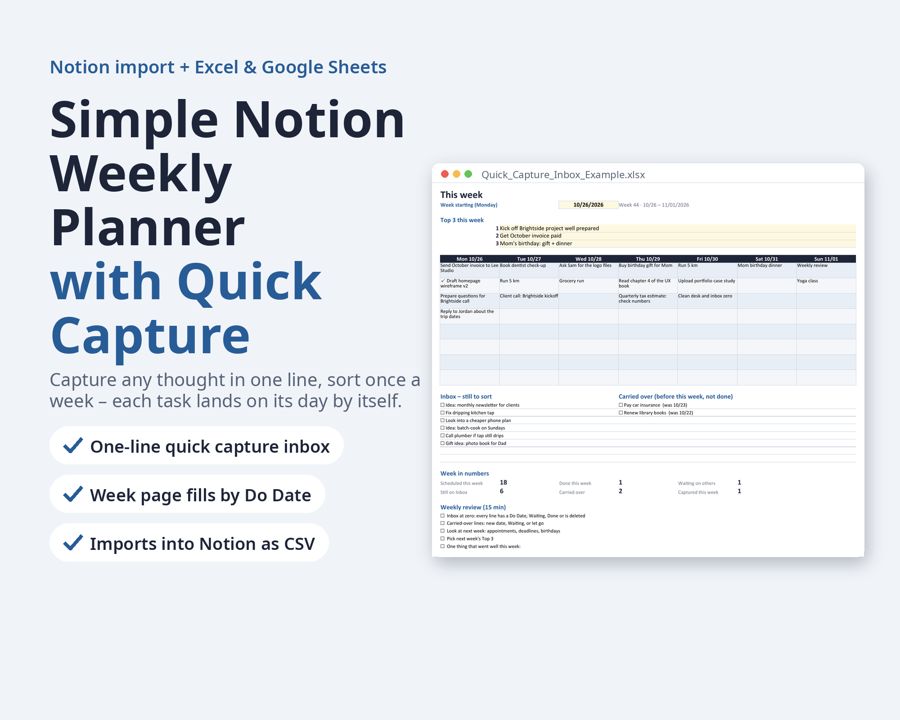
Simple Notion Weekly Planner with Quick Capture InboxA simple weekly planner with a quick capture inbox: write any thought in one line, sort it once a week, and every task lands on its day by…FreeFull version $7.99
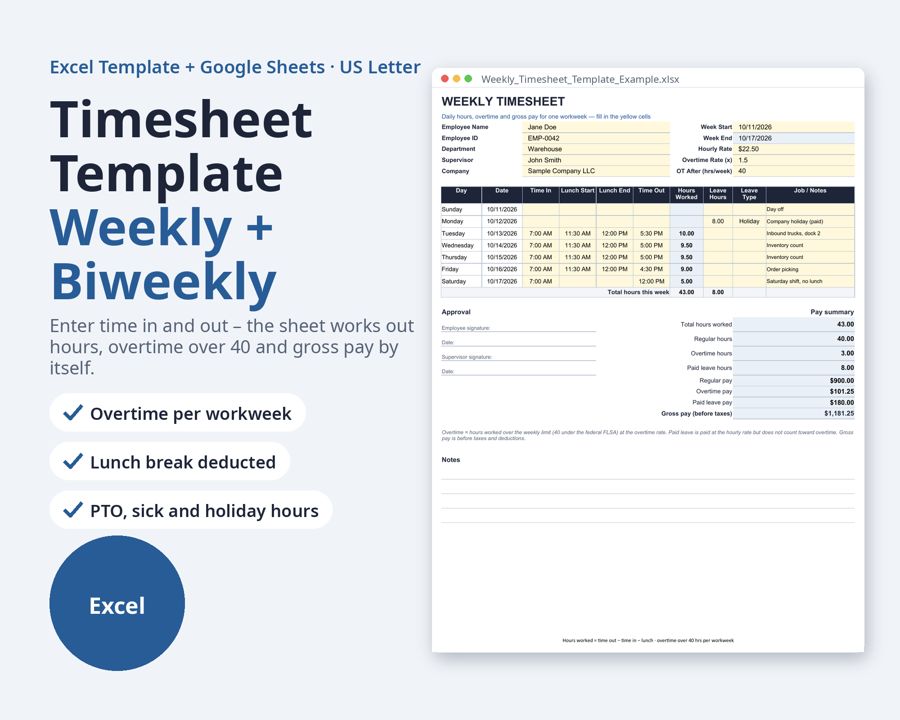
Timesheet Template Excel Weekly and BiweeklyTimesheet template for Excel and Google Sheets in two versions, weekly and biweekly. Enter time in, lunch and time out for each day; the…FreeFull version $4.99ReadyStack
Calculators, templates and deadlines for the rules that change every year — free in your browser.