· ReadyStack
Worked example
Real numbers from this tool, line by line.
If you run the office Secret Santa and book the Christmas party, there is a tax question hiding in both, and it lands on the company, not on the staff.
Two limits decide it, and both are in the Income Tax (Earnings and Pensions) Act 2003. The first is the trivial benefit rule in section 323A. A gift the employer pays for is tax-free only if it costs £50 or less, is not cash or a cash voucher, is not a reward for work and is not in the contract. It is a cliff, not an allowance: a £55 gift is taxable on the whole £55, not on the £5 over. Directors of close companies have an extra cap of £300 of trivial benefits for the tax year (section 323B).
The second is the annual function rule in section 264. A Christmas party open to all staff, or to everyone at one site, is tax-free if the cost per head is £150 or less. Cost per head means everything: VAT, transport and any hotel, divided by everyone who attends, guests included. And the £150 is per tax year, not per event. If you also ran a summer barbecue, the two are added together. When the total goes over £150, only the functions that fit inside £150 stay exempt. The rest are taxable in full.
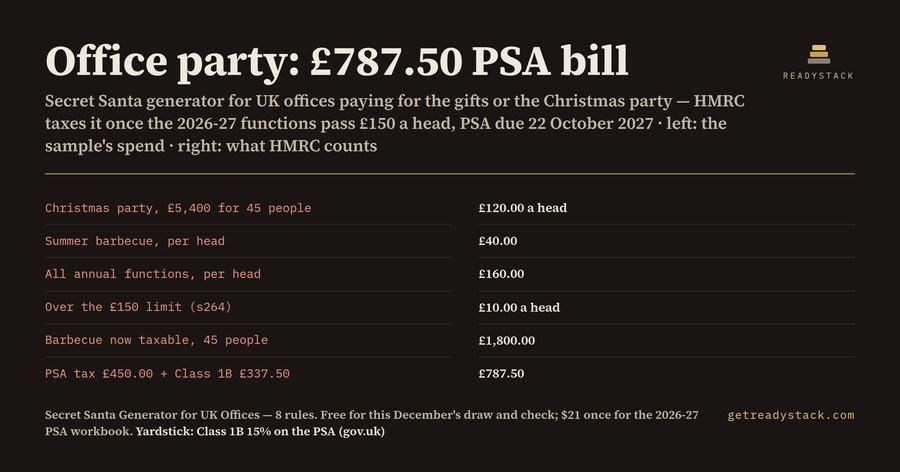
Here is the sample the free check opens with. Forty staff, a £30 company-paid gift each, a Christmas party costing £5,400 for 45 people, and a summer barbecue that cost £40 a head. The gift is under £50, so it is tax-free. The party is £120.00 a head, which on its own is fine. But £120.00 plus £40.00 is £160.00 a head, £10.00 over the limit. The party still fits inside £150, so it keeps the exemption, and the barbecue becomes taxable: £40 for each of 45 people, £1,800.00.
Nobody wants to put a barbecue on 45 payslips, so employers usually settle it in a PAYE Settlement Agreement. Under a PSA the company pays the tax for the staff, so the tax is grossed up: at the 20% basic rate, £1,800.00 needs £450.00 of tax. Class 1B National Insurance is then charged on the value plus the tax, at 15% for 2026 to 2027, which is £337.50. Total: £787.50. For the 2026-27 tax year you apply for the PSA by 5 July 2027 and pay by 22 October 2027, or 19 October by post.
Change one number and the answer moves. Without the barbecue, the same party leaves £30.00 a head of headroom and the bill is £0.00. Keep the barbecue out but raise the company-paid gift to £55, and every gift is taxable: £2,200.00 for 40 people, £550.00 of tax plus £412.50 Class 1B, so £962.50.
Gifts staff buy for each other with their own money are a different thing. They are not provided by the employer, so none of these limits apply. The check asks for the gift the company pays for; if that is nothing, type zero.
The page also does the part you came for: the name draw. Paste your names one per line, add any pairs who should not draw each other (couples, the same team, last year's match) and press Draw names. Nobody draws themselves, the keep-apart rules hold, and nothing leaves your browser. Send each person only their own line.
The free page answers the question completely for this December. The paid workbook is for keeping it: the same 11 formulas as an .xlsx, a sheet for close-company directors that tracks the £300 cap gift by gift, and the 8 rules with their legal source, so the file you hand to your accountant before 5 July 2027 explains itself. It is a calculation aid, not tax advice.
15 seconds — what it actually does
Questions people ask
What does this Secret Santa generator check?
It draws names for your office Secret Santa, keeping couples or teams apart, and then checks the part HMRC cares about for 2026-27. A company-paid gift over £50 is taxable in full. If the Christmas party plus your other annual functions cost more than £150 a head, it shows the taxable amount and the PSA tax and Class 1B bill.
Who is it for?
UK office managers, HR and payroll leads, and directors of small limited companies who organise the December Secret Santa and book the Christmas party. If the company pays for the gifts or the party, the £50 trivial-benefit and £150 annual-function limits apply, and directors of close companies also have a £300 trivial-benefit cap for the tax year.
Why not use a free Secret Santa site?
Free Secret Santa sites only draw names. None of them asks who pays for the gift, adds your summer barbecue to the Christmas party, or tells you the per-head headroom under £150. Payroll software sees the cost only after the money is spent, when the only fix left is a PAYE Settlement Agreement.
What is free?
Everything on the page: the name draw with exclusions, and the full HMRC check. You type 5 numbers (employees, the gift the company pays for, the party cost, people at the party, and the per-head cost of any other annual function) and see all 11 results, including the £150 headroom and the PSA bill. Nothing is uploaded.
What does getting it wrong cost?
Example: 40 staff, a £5,400 party for 45 people and a £40-a-head summer barbecue add up to £160 a head, £10 over the £150 limit. The £40 barbecue becomes taxable, £1,800 in total. Under a PSA that costs £450 of grossed-up tax plus £337.50 Class 1B, so £787.50, due by 22 October 2027.
Ask about this tool
One question, answered by the person who built it. Your email only if you want the answer sent.