This free browser tool flags Elasticsearch and Kibana stack elements that break migration to OpenSearch and shows an OpenSearch replacement.

Try it freeFull version · $29 →
What you get: Scans the whole repository in one pass and exports one migration checklist (Markdown) per file, ready for the change ticket.
Updated 2026-09-29 · ReadyStack
OpenSearch migration check for Elasticsearch and Kibana stacks: flags Elastic-licensed images, xpack settings, 7.14+ clients, ILM, dense_vector and Beats that break the cutover, with the OpenSearch replacement. Runs entirely in your browser — nothing is uploaded.
Same engine as the VS Code extension, byte for byte.
Free for the file open in your editor - no key, no limit. The workspace sweep and the report ask for a key.
VS Code MarketplaceOpen VSX (Cursor, VSCodium)ext install ReadyStack.opensearch-migration-check
Team? One key for every ReadyStack linter, 5 seats, $149 once
Scans the whole repository in one pass and exports one migration checklist (Markdown) per file, ready for the change ticket.
One payment, one licence key for this tool. The key is shown right after payment.
Elastic Cloud Hosted Standard starts at $99 per month (elastic.co/pricing/cloud-hosted).
Buy the full version — $29Need more than this one? ReadyStack Pass opens all 679 files and 561 full versions — $29/month or $199/year. See the Pass →
· ReadyStack
Real numbers from this tool, line by line.
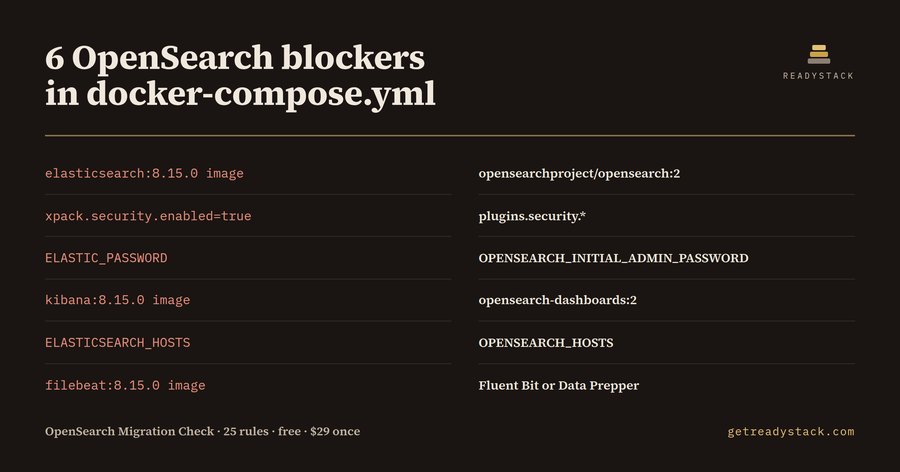
Migrate from Elasticsearch to OpenSearch: 6 lines in a sample docker-compose.yml that break the cutover
6 lines in a sample Elasticsearch 8.15.0 docker-compose.yml break an OpenSearch cutover, and platform engineers in teams moving off Elastic find most of them only when the new node refuses to start. Elastic moved Elasticsearch and Kibana from Apache-2.0 to SSPL / Elastic License 2.0 with version 7.11, and Elasticsearch 7.17 reached end of support on 2026-01-15. OpenSearch forked from 7.10.2 and stayed Apache-2.0, so it is where many self-managed clusters go next.
The stack is the one you find in many repositories: one Elasticsearch node, Kibana, and Filebeat shipping container logs, all on 8.15.0.
elasticsearch:
image: docker.elastic.co/elasticsearch/elasticsearch:8.15.0
environment:
- xpack.security.enabled=true
- ELASTIC_PASSWORD=changeme
kibana:
image: docker.elastic.co/kibana/kibana:8.15.0
environment:
- ELASTICSEARCH_HOSTS=http://elasticsearch:9200
filebeat:
image: docker.elastic.co/beats/filebeat:8.15.0
| Line that breaks | OpenSearch fix |
|---|---|
| elasticsearch:8.15.0 image | opensearchproject/opensearch:2 |
| xpack.security.enabled=true | plugins.security.* |
| ELASTIC_PASSWORD | OPENSEARCH_INITIAL_ADMIN_PASSWORD |
| kibana:8.15.0 image | opensearch-dashboards:2 |
| ELASTICSEARCH_HOSTS | OPENSEARCH_HOSTS |
| filebeat:8.15.0 image | Fluent Bit or Data Prepper |
Why each one matters:
xpack.security.enabled stops the node at boot.OPENSEARCH_INITIAL_ADMIN_PASSWORD. ELASTIC_PASSWORD is simply ignored.OPENSEARCH_HOSTS, not ELASTICSEARCH_HOSTS, and saved objects from Kibana newer than 7.10.2 do not import.Rewritten for OpenSearch 2.17.0, the same file gives 0 findings.
Search the repository for elasticsearch and you get every service name, volume path and URL. The dangerous hits are in the dependency files. elasticsearch-py 7.14.0 added a product check that raises UnsupportedProductError on any server that is not Elasticsearch, and the Node, Java, Go and Ruby clients do the same. A requirements.txt with elasticsearch==8.15.1 and elasticsearch-dsl==8.15.3 gives 2 findings; the fix is opensearch-py.
Index templates carry their own blockers: dense_vector becomes knn_vector with index.knn: true, flattened becomes flat_object (OpenSearch 2.7 and later), ILM policies become ISM policies under _plugins/_ism, and ES|QL queries on /_query need to be rewritten as PPL or SQL.
OpenSearch Migration Check is a VS Code extension with 25 rules covering images, settings, clients, pipelines, mappings and APIs. Open a file and the findings appear in the Problems panel with the line number and the replacement. For a 7.x image it also counts the days since the 2026-01-15 end of support, from the date you run it. The same engine runs in the free web version in the browser.
Staying on Elastic hosting is a monthly bill: Elastic Cloud Hosted Standard starts at $99 per month. It does not move data; it lists the lines to change first.
It reads a docker-compose.yml, elasticsearch.yml, Kibana config, Logstash pipeline, client dependency file or index mapping and flags every line that breaks a move from Elasticsearch and Kibana to OpenSearch: Elastic images, xpack settings, 7.14+ clients, ILM, dense_vector and Beats. Each finding has the line number and the OpenSearch replacement. It has 25 rules and runs locally.
Platform engineers, SREs and DevOps teams moving a self-managed Elasticsearch 7.x or 8.x stack to OpenSearch or Amazon OpenSearch Service, usually because of the SSPL / Elastic License change in 7.11 or because Elasticsearch 7.17 reached end of support on 2026-01-15. It also helps developers switching application clients to opensearch-py or the OpenSearch JavaScript client.
Grep for elasticsearch hits every service name, volume path and URL, so the real blockers drown. A chatbot rarely knows that Elastic clients from 7.14 on raise UnsupportedProductError against OpenSearch, that OpenSearch refuses to start on an unknown xpack setting, or that OpenSearch 2.12 needs OPENSEARCH_INITIAL_ADMIN_PASSWORD. This check knows those lines and gives the replacement for each.
The free version checks any open file with all 25 rules, with line numbers and fixes, and the web version does the same in the browser. Nothing is cut or time-limited. The paid version, $29 once, scans the whole repository in one pass and exports one Markdown migration checklist per file, ready to attach to the change ticket.
Staying on Elastic's hosted offering costs money every month: Elastic Cloud Hosted Standard starts at $99 per month according to Elastic's pricing page. The free check costs nothing and the repository-wide version is a one-time $29, one licence key per person or team seat. It does not replace migrating the data, it finds the config and code lines to change first.
One question, answered by the person who built it. Your email only if you want the answer sent.
Paste this code into your page. It runs in your visitor’s browser and stays up to date. Nothing your visitors type is stored.
For businesses: your name and logo instead of ours, and each visitor’s result + e-mail in your inbox (only when they tick consent) — Pro from $19/month. See Pro →
For a team or company: for an invoice with your company details, a quote or several licences, write to [email protected].
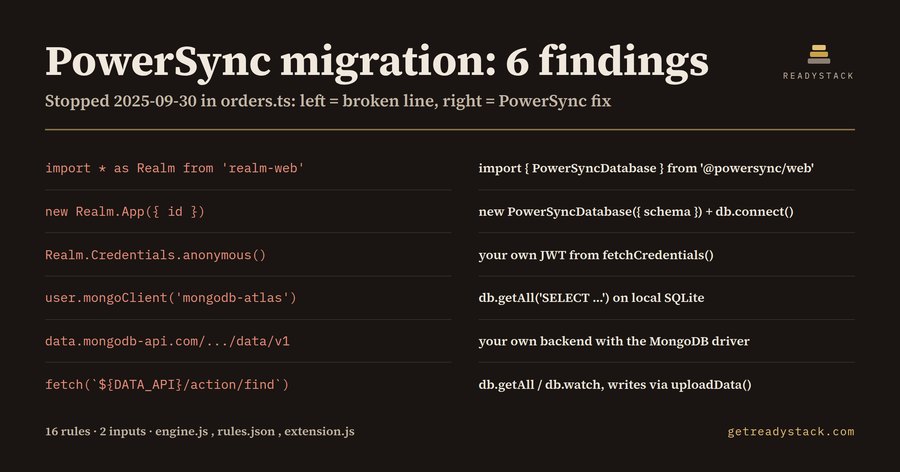
PowerSync Migration 2026 — check your code for freeThis free tool finds Realm Sync, Atlas Data API and HTTPS Endpoint calls and shows the PowerSync replacement.FreeFull version $29
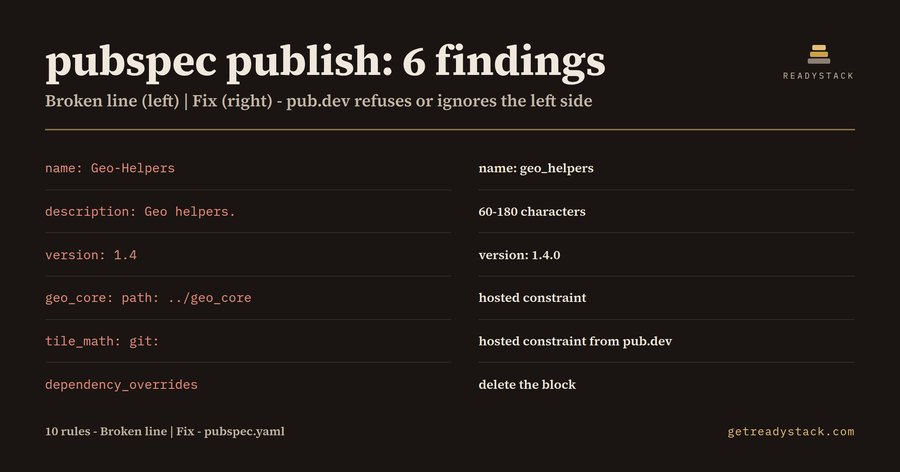
Pubspec Publish check — check your package before publishingThis free browser tool checks pubspec.yaml for pub.dev publishing issues and shows the affected entries.FreeFull version $29
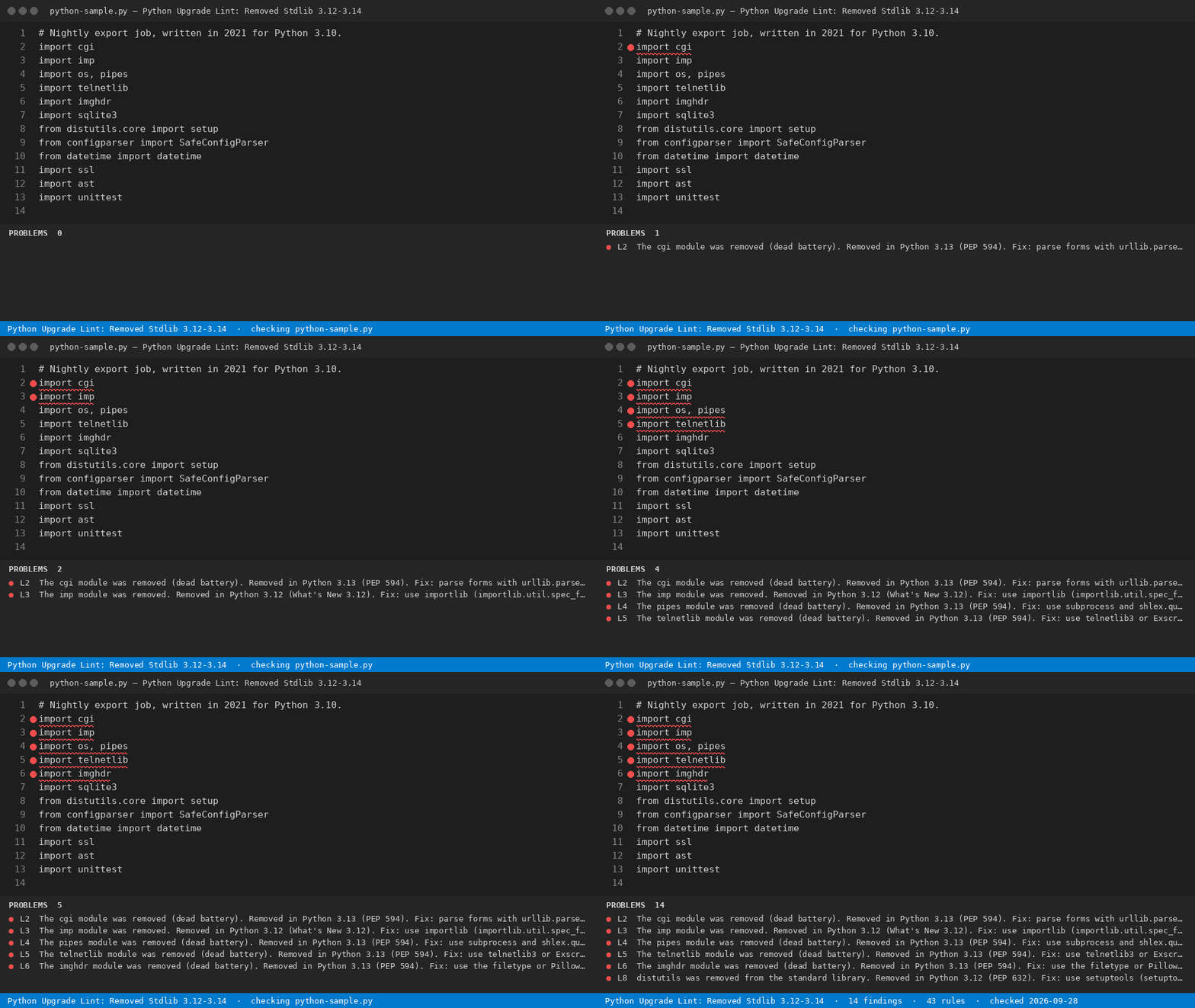
Python 3.12 Removed modules — check your python code freeFlags imports and calls removed from the standard library in 3.12–3.14 (cgi, imp, distutils, telnetlib, ast.Str) before you leave Python…FreeFull version $29
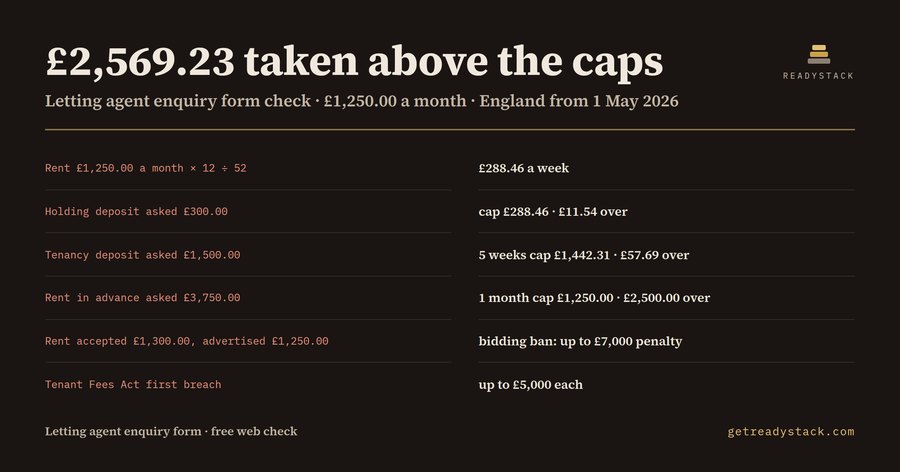
Letting agent enquiry form: Renters' Rights Act 2026 deposit and rent-in-advance checkFor letting agents in England: enter the monthly rent and what you ask for. See the holding-deposit, tenancy-deposit and rent-in-advance…FreeFull version $60
MinIO Migration — map minio settings to rustfsMap MinIO images, variables, charts, and health paths in your configuration files to the corresponding RustFS lines.FreeFull version $29
NVIDIA NIM Migration — find replacements in your filesFind NVIDIA NIM images, keys, charts, and endpoints in your files and see the SGLang or vLLM replacement line for each.FreeFull version $29ReadyStack
Calculators, templates and deadlines for the rules that change every year — free in your browser.