· ReadyStack
Worked example
Real numbers from this tool, line by line.
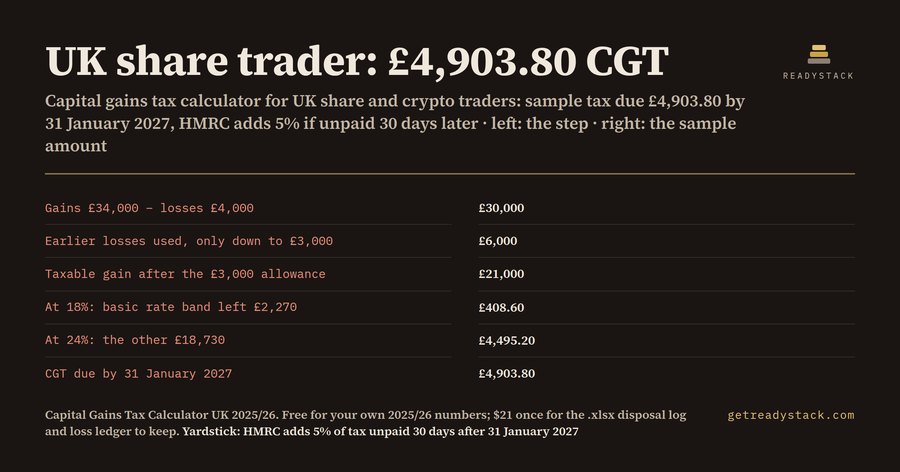
A UK share trader on a £48,000 income who made £34,000 of gains and £4,000 of losses in 2025/26 owes £4,903.80 of Capital Gains Tax, payable by 31 January 2027. This is the working, line by line, from the free calculator on this page:
| Step | Amount |
|---|---|
| Gains £34,000 − losses £4,000 | £30,000 |
| Earlier losses used (only down to £3,000) | £6,000 |
| Taxable gain after the £3,000 allowance | £21,000 |
| Basic rate band left: £37,700 − (£48,000 − £12,570) | £2,270 |
| £2,270 at 18% | £408.60 |
| £18,730 at 24% | £4,495.20 |
| Capital Gains Tax due | £4,903.80 |
If that bill is still unpaid 30 days after 31 January 2027, HMRC adds a 5% penalty of £245.19, then another 5% at 6 months and again at 12 months, plus interest.
Why the split matters
Gains are taxed at 18% or 24% for the whole 2025/26 tax year, which ran from 6 April 2025 to 5 April 2026. You do not choose a rate. The gain is added on top of your taxable income, and only the part that still fits inside the £37,700 basic rate band gets 18%. Our sample trader has taxable income of £35,430, so just £2,270 of the gain fits. The other £18,730 is taxed at 24%.
Gift Aid and relief-at-source pension payments extend the basic rate band. Add your gross amount to the band field and the 18% slice grows. Above £100,000 of income, the Personal Allowance falls by £1 for every £2 over, so the band is used up sooner.
The loss rule most quick answers miss
Losses from this tax year come off your gains in full. Losses from earlier years work differently: they only bring your gains down to the £3,000 annual exempt amount, and whatever is left carries forward. Change the sample to £20,000 of gains, £2,000 of current losses and £30,000 of old losses. The calculator uses £15,000 of the old losses, carries £15,000 forward and keeps £3,000 that a "use it down to zero" sum would have burned.
A loss also has to be claimed. You have 4 years after the end of the tax year it was made in, so a 2022/23 loss must be reported by 5 April 2027.
Do you need to report at all?
HMRC's SA108 notes give three triggers. You must fill in the capital gains pages if your sale proceeds were more than £50,000, if your gains before losses were more than £3,000, or if you want to claim a loss. Any one is enough, even when no tax is due. The sample's £140,000 of proceeds triggers it on its own.
Check it against HMRC's own example
gov.uk gives this example: taxable income £20,000 and gains of £12,600. Type an income of £32,570 (that is £20,000 plus the £12,570 allowance), gains of £12,600 and zero losses. The calculator shows a taxable gain of £9,600, all of it at 18%, and £1,728 of tax, which is the same figure HMRC prints.
What you type, and what you keep
The page asks for five of your own numbers: gains, losses this year, unused earlier losses, income before the Personal Allowance, and total sale proceeds. All 12 results appear in your browser and nothing is uploaded. The answer is complete and free.
The $21 workbook is the record you keep. It has the same 12 formulas, a 200-row disposal log that totals your gains, losses and proceeds into the calculator, and a loss ledger that shows the claim deadline for every year. Give it to your accountant or keep it with your SA108 pages.
Not covered: share matching itself (enter your cost after same-day, 30-day and Section 104 matching), UK residential property, Business Asset Disposal Relief, trusts and non-residents.
15 seconds — what it actually does
Questions people ask
What does this capital gains tax calculator work out?
It works out UK Capital Gains Tax on shares and crypto sold between 6 April 2025 and 5 April 2026. It nets this year's losses, uses brought-forward losses only down to the £3,000 annual exempt amount, splits the rest between 18% and 24% using your unused basic rate band, and shows whether you must report.
Who is it for?
UK-resident individuals who sold shares, funds or crypto outside an ISA or pension in the 2025/26 tax year: employees with a trading account, self-employed people and landlords who also invest. You need your total gains, losses, older unused losses, income and total sale proceeds. Trusts and companies use different rules.
Why not just use a free calculator or ask a chatbot?
Most quick calculators apply one flat rate and subtract old losses down to zero. HMRC's rule is that brought-forward losses only reduce your gains to the £3,000 allowance and the rest carries forward. Using them down to zero wastes losses you could keep for a later year.
What is free and what is the paid file?
The page is free: type your five numbers and see the full 2025/26 result, including tax due, the 18% and 24% split, losses carried forward and the 5% late-payment penalty. The paid .xlsx is the record you keep: the same live formulas, a 200-row disposal log and a loss ledger with each year's 4-year claim deadline.
What does getting it wrong cost?
HMRC charges 5% of the tax still unpaid 30 days after 31 January 2027, again at 6 months and again at 12 months, plus interest. A late online return costs £100 after the deadline. On the sample trader's £4,903.80 bill, the first 5% is £245.19.
Ask about this tool
One question, answered by the person who built it. Your email only if you want the answer sent.