· ReadyStack
Worked example
Real numbers from this tool, line by line.
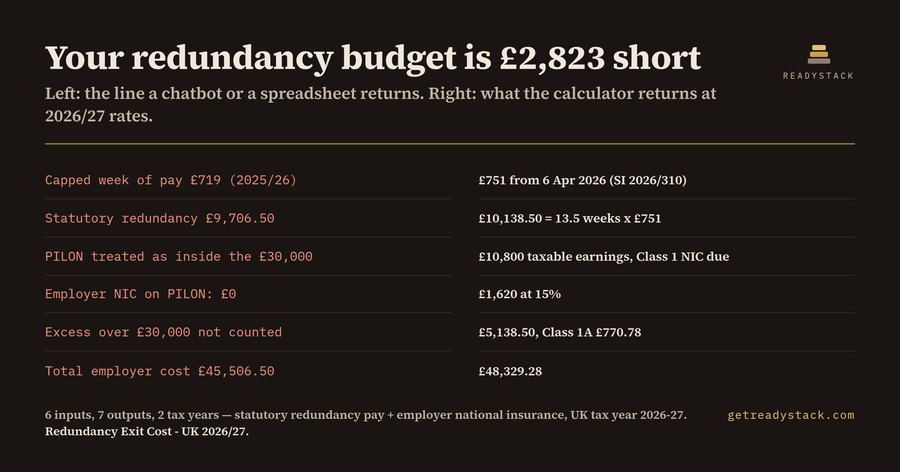
£2,823 is missing from the budget for a single redundancy - UK HR and payroll managers costing an exit dated on or after 6 April 2026. Here is the finished calculation for an operations manager, age 44, twelve complete years of service, £900 gross a week, twelve weeks of notice paid in lieu and a £25,000 enhanced payment:
| Line | 2026/27 |
|---|---|
| Capped week of pay used | £751 |
| Redundancy weeks earned | 13.5 |
| Statutory redundancy pay | £10,138.50 |
| PILON (taxable earnings) | £10,800 |
| Excess over £30,000 | £5,138.50 |
| Employer NIC (Class 1 £1,620 + Class 1A £770.78) | £2,390.78 |
| Total employer cost | £48,329.28 |
A chatbot working from last year's cap, with no employer National Insurance counted, returns £45,506.50 for the same person - £2,822.78 light. That gap is about a month of the employee's salary, and it is the employer who finds it, usually after the offer letter has gone out.
Three things go wrong, and they compound.
The weekly cap moved on 6 April 2026. The Employment Rights (Increase of Limits) Order 2026 (SI 2026/310) lifted the capped week of pay from £719 to £751, tracking the 4.5% September 2025 RPI figure. The statutory maximum went with it, from £21,570 to £22,530. Our operations manager earns £900 a week, so the cap bites: 13.5 weeks earned at £751 is £10,138.50, where the 2025/26 cap gives £9,706.50. That is £432 before anything else has been counted, and it is the easiest number to get wrong: cached articles, printed handbooks and models trained before April still say £719.
Pay in lieu of notice is not inside the £30,000. The £30,000 exemption in ITEPA 2003 s.403 covers genuine compensation for loss of office. It does not cover PILON, which is taxable as earnings and carries full Class 1 National Insurance. Twelve weeks at £900 is £10,800 that people routinely park under the £30,000 umbrella and then never tax.
Nobody adds the employer's National Insurance. The secondary rate has been 15% since April 2025 and stays at 15% for 2026/27, on earnings above a £5,000 secondary threshold. The £10,800 PILON attracts £1,620 of employer Class 1. The statutory pay plus ex-gratia comes to £35,138.50, so £5,138.50 sits above the £30,000 line and attracts employer Class 1A at 15%: £770.78. That is £2,390.78 of employer NIC on one exit, and it is the part employee-facing calculators leave out: they tell the employee what is owed, not the employer what it costs.
The week count is the other place hand-calculations slip. Section 162 of the Employment Rights Act 1996 counts 1.5 weeks for each year worked at 41 or over, one week for each year from 22 to 40 and half a week below that, capped at twenty years, with two years needed to qualify at all. At 44 with twelve years that is 13.5 weeks.
The extension puts those rules in the toolbar. Six inputs - tax year, gross weekly pay, age, complete years of service, notice weeks paid in lieu, enhanced payment - feed the seven figures in the table above. The tax year is a switch, so you can set a redundancy dated 3 April next to one dated 8 April and see what four days are worth. Everything runs in the browser; salary and exit figures never leave the machine, and the only outbound call the extension makes is the licence-key check.
All of that is free, for both tax years, with no key, no usage limit and nothing blurred. The licence key is £29 once, and it adds two things on a different axis: .csv export of a whole consultation pool so the figures leave the browser as a file you own, and an alarm before the April uprating changes the cap. Having a solicitor check one settlement agreement costs a UK employer £500-£750 plus VAT. The calculation here is free and unlimited without the key.
Questions people ask
What does this extension actually work out?
It works out what one UK redundancy costs the employer. You enter weekly pay, age, complete years of service, notice paid in lieu and any enhanced payment. It returns statutory redundancy pay at the capped weekly rate, the PILON figure, the amount above the £30,000 exemption, employer Class 1 and Class 1A National Insurance, and the total cash the business pays.
Who is it for?
UK HR managers, payroll managers and finance controllers who have to put a number on a redundancy or a settlement agreement before it is offered. It suits small and mid-sized employers without an in-house employment lawyer, and consultants pricing a redundancy consultation for a client in the 2026/27 tax year.
Why not just ask a chatbot or use a free online calculator?
Free redundancy calculators return the employee's statutory entitlement only. They stop before PILON, the £30,000 exemption and employer National Insurance, which is where the employer's money actually goes. General chatbots still quote the 2025/26 weekly cap of £719 and commonly treat notice pay as covered by the £30,000.
What is free and what needs the licence key?
Every calculation is free, for both tax years, with no usage limit and nothing blurred or locked. The £29 licence key adds two things on a different axis: .csv export of a whole consultation pool so the figures leave the browser as a file you own, and an alarm before the April uprating changes the cap.
What would this cost if a person did it?
UK employers typically contribute £500 to £750 plus VAT towards the independent legal advice an employee must take on a single settlement agreement, and that contribution buys roughly two hours of solicitor time. The licence key is £29 once, and the calculation itself is free and unlimited without it.
Ask about this tool
One question, answered by the person who built it. Your email only if you want the answer sent.